
 Image 1 of 3
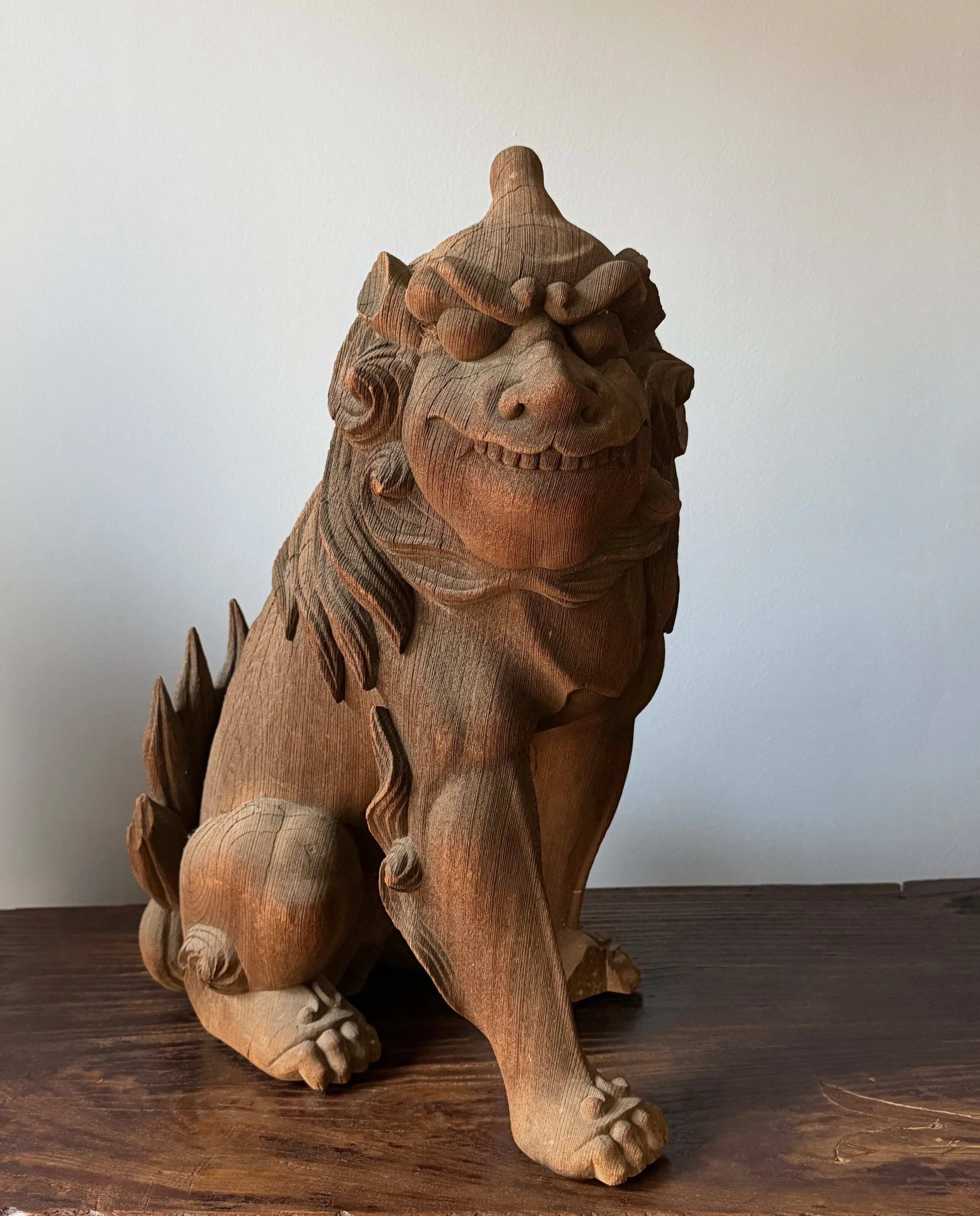 Image 2 of 3
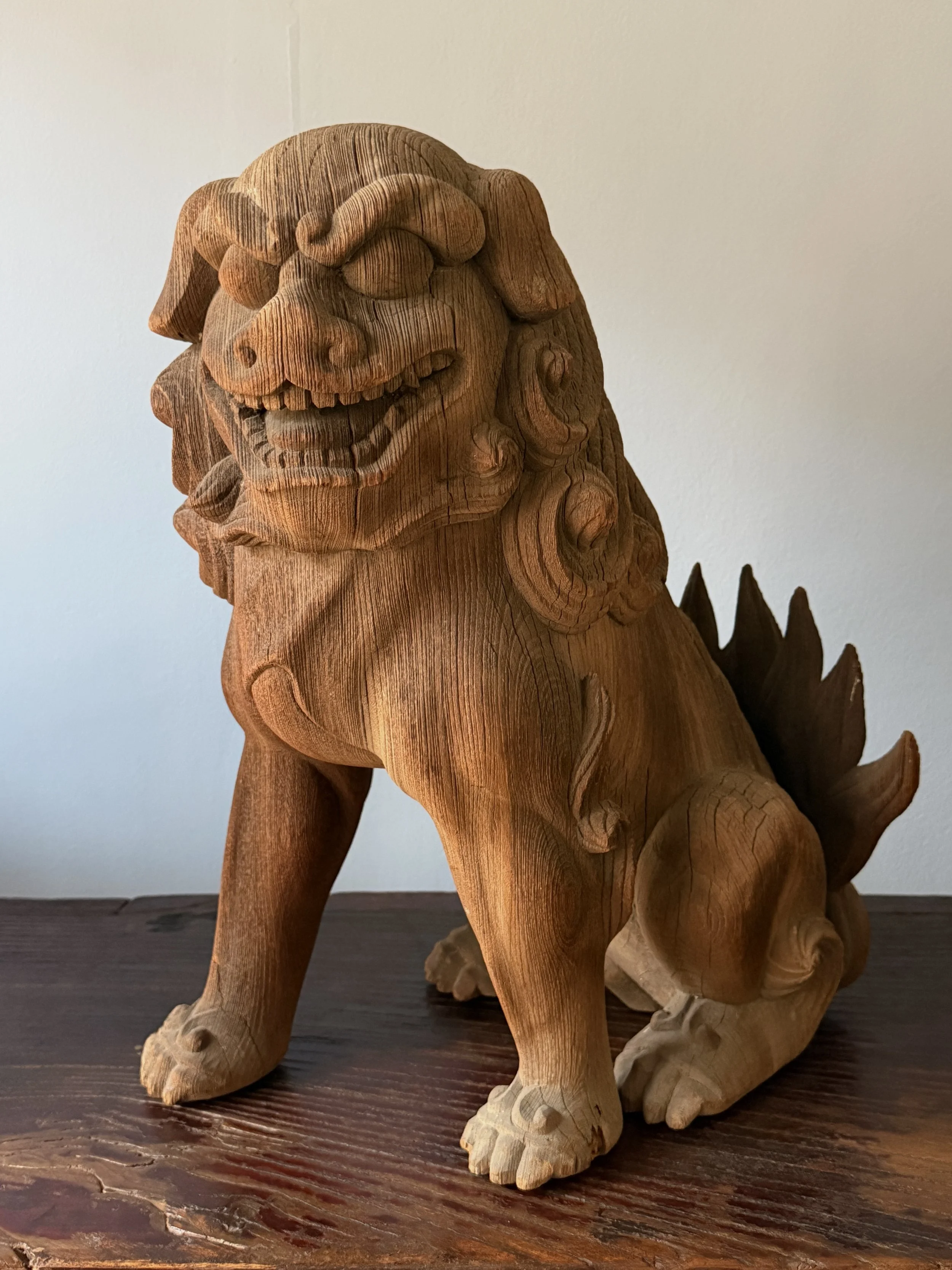 Image 3 of 3
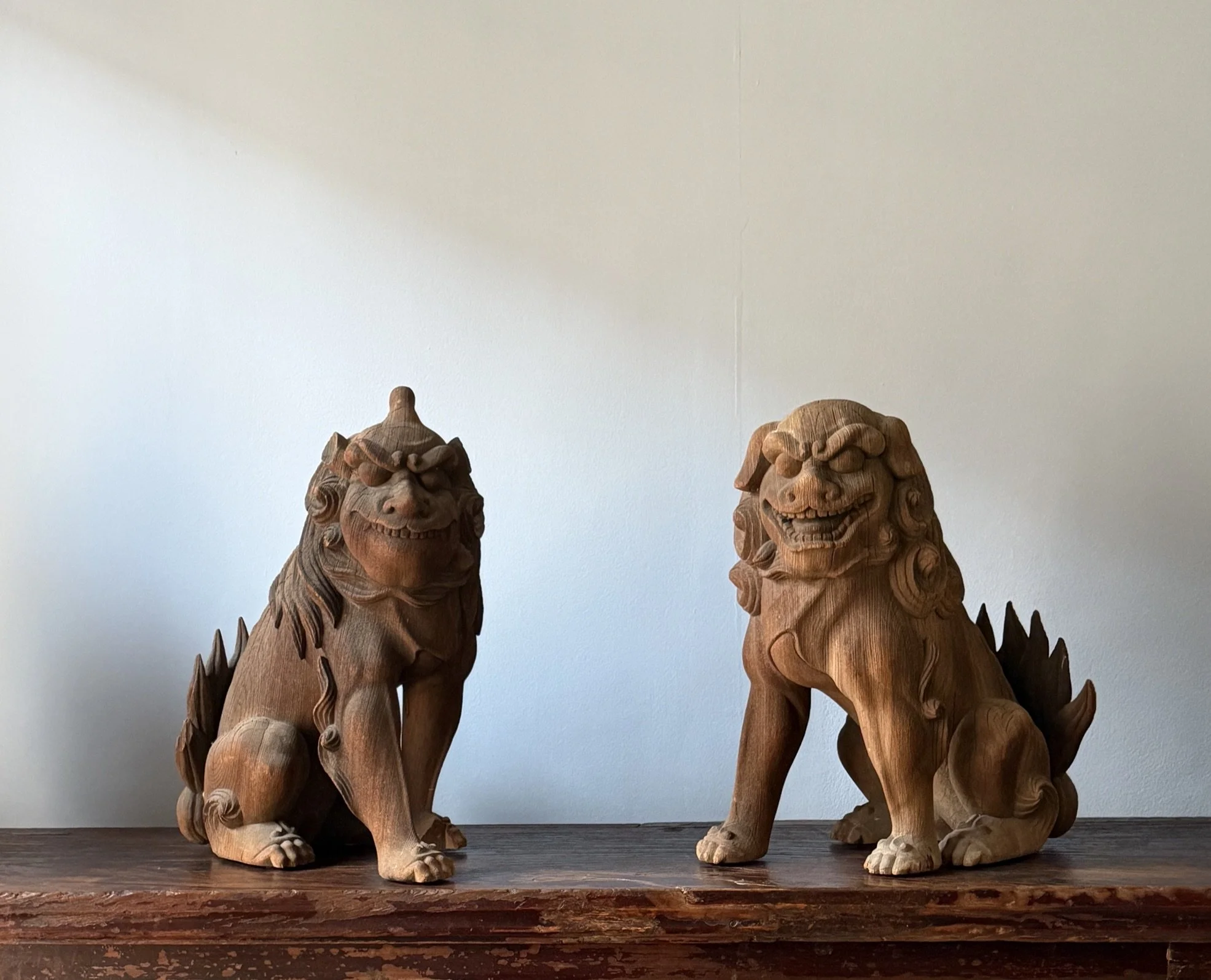
ancient manga …this pair of Japanese lion dogs (komainu) from Kyushu 17th century or earlier … being mythical guardians to Shinto shrines and occasionally to Buddhist temples. They are interesting as their faces have a human likeness which can be traced back to ancient Kyushu folk lore when it was said that people from Kyushu Island dressed and barked like dogs when guarding the Emperor.
Stylized animal-person art form is not uncommon in ancient Japan as seen at Kyoto’s Kozan ji temple . Where a set of animal -person caricatures created by monks in the 12th-13th centuries, now national treasure scrolls, depict anthropomorphic rabbits and frogs. Today they are seen as laying the foundation for modern anime/manga art. this This pair of remarkable komainu sculptures can be viewed as likewise.
origin Kyushu Island; 17th century or earlier.
cedar wood (hinoki)
height: 50cm; length 40cm; width 30cm
#m20
Enquire: jw.myeast@gmail.com
ancient manga …this pair of Japanese lion dogs (komainu) from Kyushu 17th century or earlier … being mythical guardians to Shinto shrines and occasionally to Buddhist temples. They are interesting as their faces have a human likeness which can be traced back to ancient Kyushu folk lore when it was said that people from Kyushu Island dressed and barked like dogs when guarding the Emperor.
Stylized animal-person art form is not uncommon in ancient Japan as seen at Kyoto’s Kozan ji temple . Where a set of animal -person caricatures created by monks in the 12th-13th centuries, now national treasure scrolls, depict anthropomorphic rabbits and frogs. Today they are seen as laying the foundation for modern anime/manga art. this This pair of remarkable komainu sculptures can be viewed as likewise.
origin Kyushu Island; 17th century or earlier.
cedar wood (hinoki)
height: 50cm; length 40cm; width 30cm
#m20
Enquire: jw.myeast@gmail.com