
 Image 1 of 3
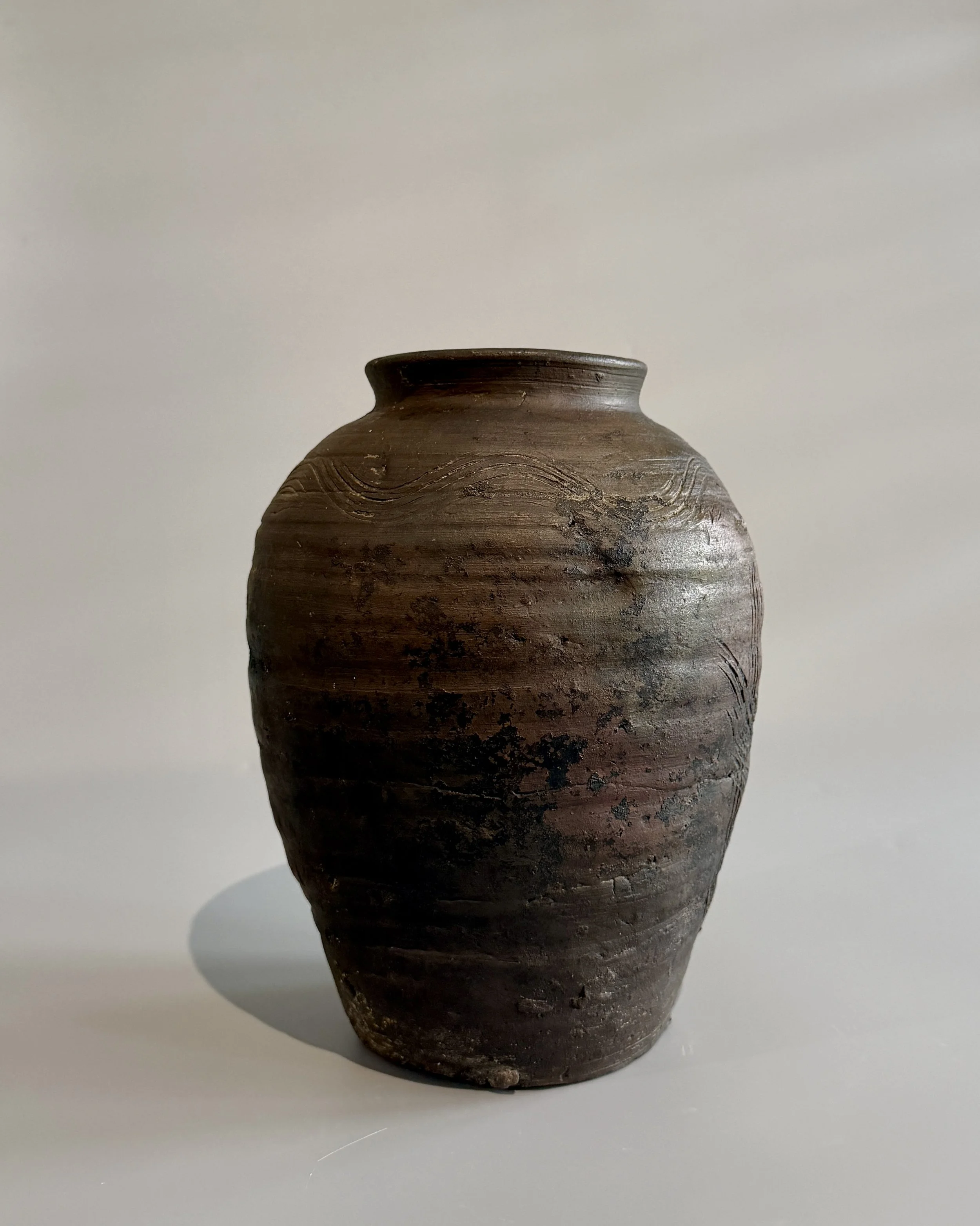 Image 2 of 3
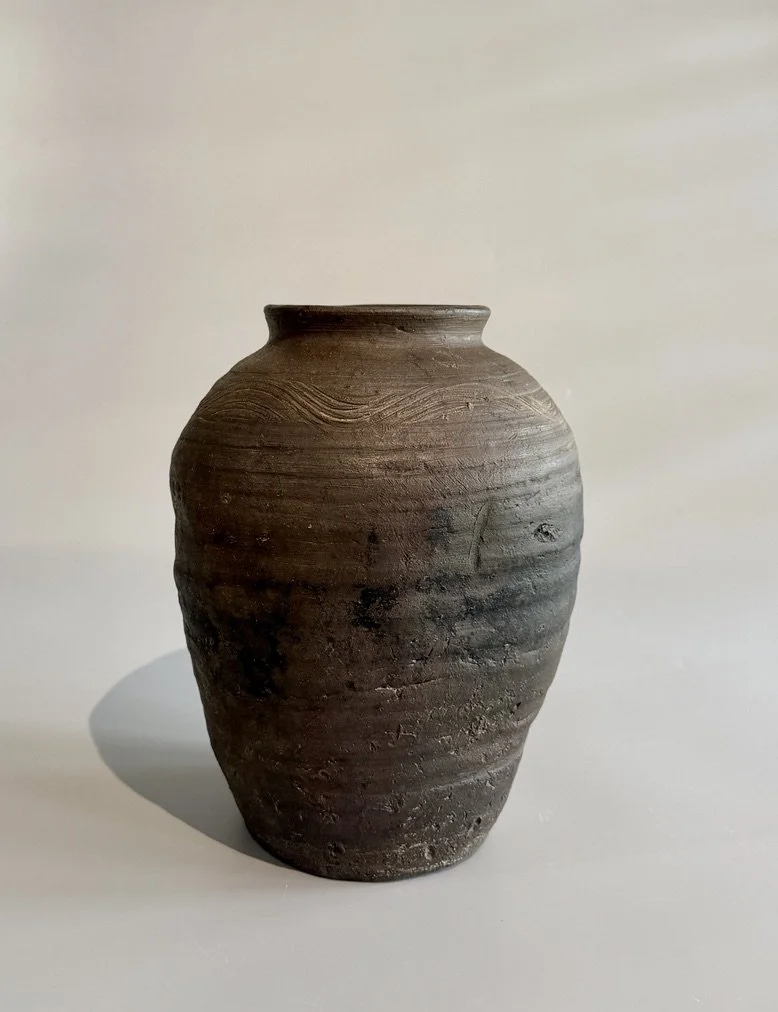 Image 3 of 3
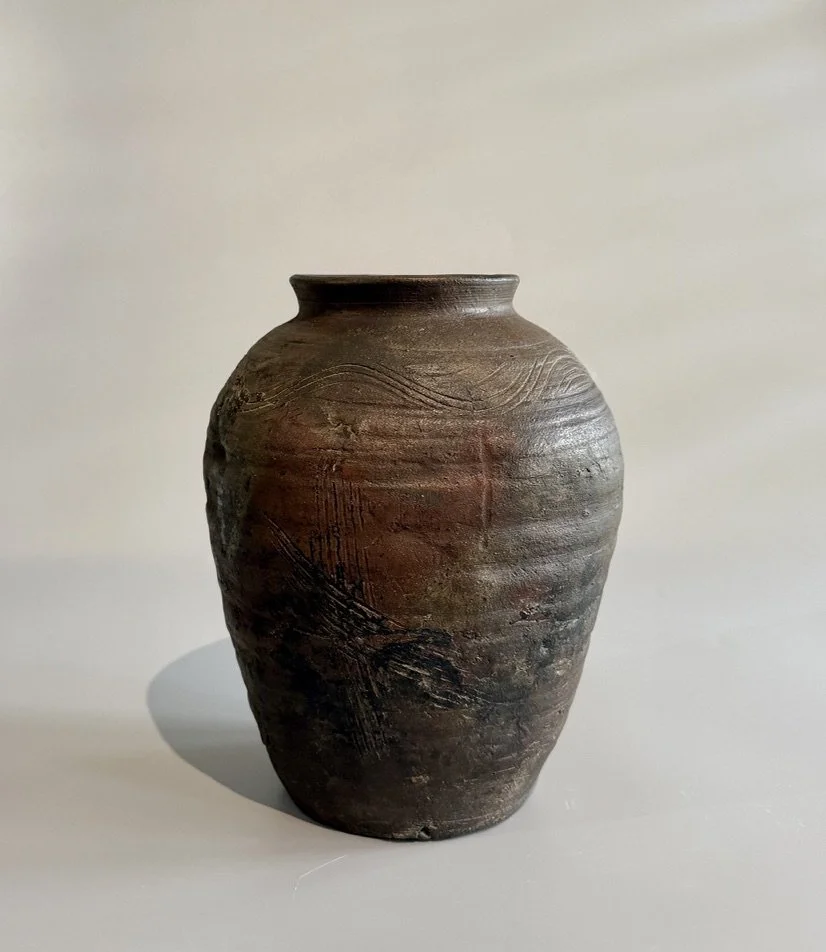
an early tea jar 15th century as determined from the short neck with everted lip. The jar formed from iron rich clay of the Okayama (Bizen) area when fired produces a reddish brown vessel of significant hardness; the unglazed surface receiving natural ash deposits giving the characteristic landscape markings of Bizen ware . The wavy incised pattern to the shoulder is characteristic of the the early jars having evolved during the late Kamakura period (early 14th century). Potters identification markings also seen.
Bizen wares are believed to have been established in the 12th century (late Heian period) in Okayama province south west Honshu island with its roots in earlier Sue ware. Early Bizen wares are greyish black but gradually from late 13th century when kilns switched to reduction firing the wares exhibited a redish colour as seen in patches in this example. The jar is coil built typical of early Bizen wares.
This jar is a fine example of the early Bizen tea jars .
height: 27cm
an early tea jar 15th century as determined from the short neck with everted lip. The jar formed from iron rich clay of the Okayama (Bizen) area when fired produces a reddish brown vessel of significant hardness; the unglazed surface receiving natural ash deposits giving the characteristic landscape markings of Bizen ware . The wavy incised pattern to the shoulder is characteristic of the the early jars having evolved during the late Kamakura period (early 14th century). Potters identification markings also seen.
Bizen wares are believed to have been established in the 12th century (late Heian period) in Okayama province south west Honshu island with its roots in earlier Sue ware. Early Bizen wares are greyish black but gradually from late 13th century when kilns switched to reduction firing the wares exhibited a redish colour as seen in patches in this example. The jar is coil built typical of early Bizen wares.
This jar is a fine example of the early Bizen tea jars .
height: 27cm